Do You Need a Bone Graft for Dental Implants?
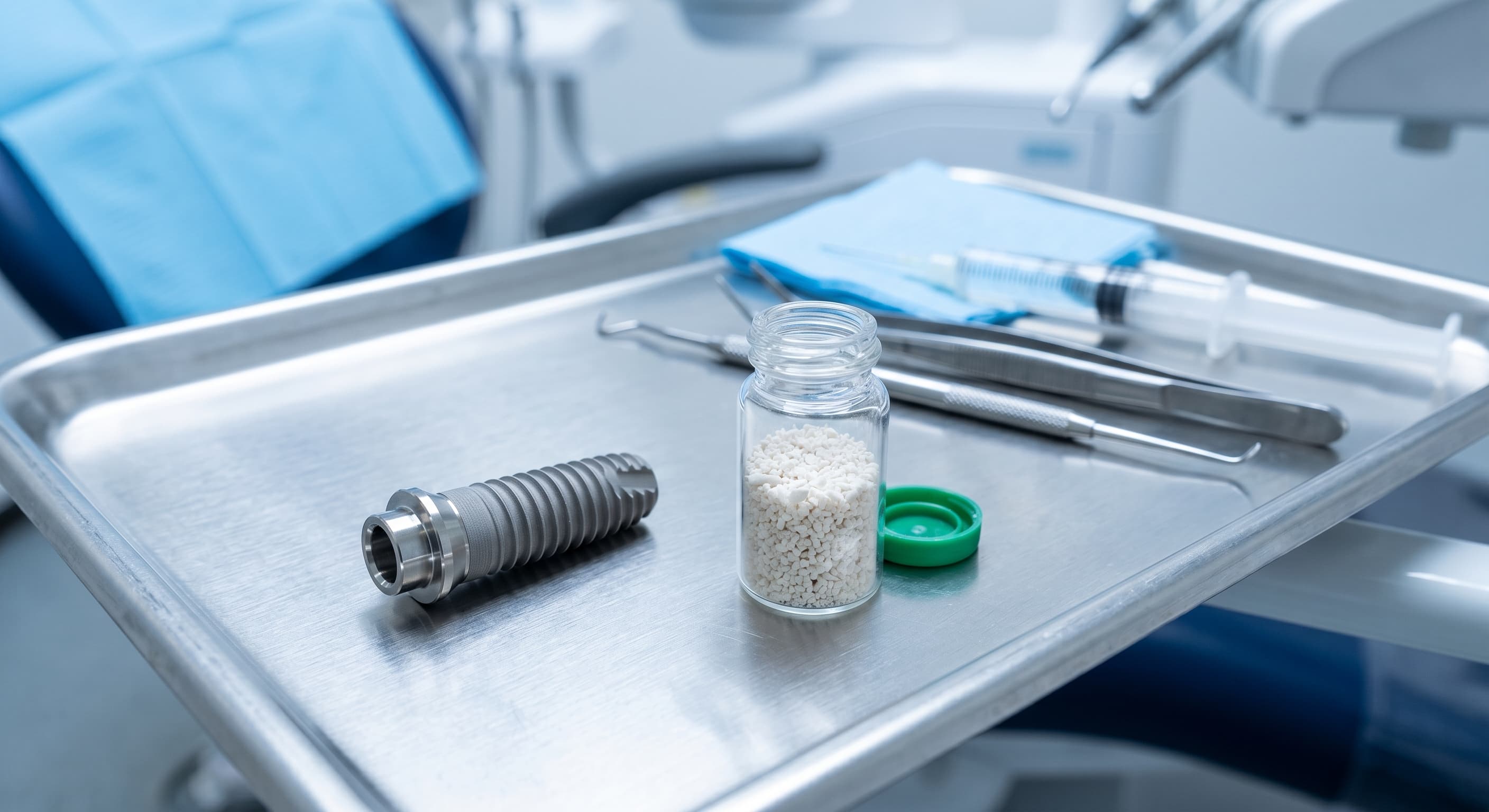
A bone graft for dental implants is the number-one reason patients delay the procedure. Not the surgery itself, not the cost, not the recovery. It's hearing "you might need a bone graft first" and imagining something far more invasive than it actually is. The reality: a bone graft is a routine addition to roughly 50% of implant cases, according to the American Academy of Implant Dentistry. It adds $400-$1,200 to the cost, 15-30 minutes to the surgical appointment, and 3-6 months of healing before the implant can be placed. It's not a second surgery. In many cases, it happens during the same visit as the extraction or implant placement.
Dr. Esther Jeong at Willow Family Dentistry in Wylie, TX uses iCAT 3D imaging to determine whether a bone graft is necessary before treatment begins. You'll know the answer at your consultation, not the day of surgery. This guide explains who needs a graft, what the different types are, and what the recovery actually feels like.
Why Would You Need a Bone Graft for Dental Implants?
A dental implant is a titanium post that integrates directly with your jawbone. For that integration (osseointegration) to succeed, the bone surrounding the implant must be dense enough and voluminous enough to hold the post securely. Think of it like setting a fence post: if the ground is deep and firm, the post holds. If the ground is shallow or soft, it doesn't.
Bone loss happens for several specific reasons. The most common is time after tooth loss. The Mayo Clinic notes that jawbone begins resorbing (shrinking) within weeks of a tooth being extracted or lost. The bone that previously supported that tooth root no longer receives the stimulation of chewing forces, so the body gradually reabsorbs it. Within the first year after extraction, patients can lose 25% of the bone width at that site. By 3-5 years, the loss can be substantial enough that an implant won't have adequate support without augmentation.
Other causes of insufficient bone include long-term denture wear (the pressure from dentures accelerates resorption), periodontal disease that destroyed bone before the tooth was even lost, trauma or infection that damaged the jaw at the extraction site, and anatomical factors like a naturally thin ridge or proximity to the sinus floor in the upper jaw.
The iCAT 3D scan at Willow reveals all of this before any treatment begins. Dr. Jeong measures bone width, height, and density at the exact implant site in three dimensions. A traditional 2D X-ray can miss bone deficiencies that are obvious on a 3D scan. That's why she images every implant case with iCAT before recommending a treatment plan.
What Types of Bone Grafts Are Used for Dental Implants?
Not all bone grafts are the same. The type Dr. Jeong recommends depends on how much bone is missing and where.
| Graft Type | Material Source | Best For | Cost Range |
|---|---|---|---|
| Socket Preservation | Allograft (donor bone) or xenograft (bovine) | Placed immediately after extraction to prevent resorption | $400-$800 |
| Ridge Augmentation | Allograft, xenograft, or synthetic | Rebuilding width or height of a ridge that's already resorbed | $600-$1,200 |
| Sinus Lift | Allograft or xenograft | Upper back molars where the sinus floor is too close to the ridge | $800-$1,200 |
| Autograft (Your Own Bone) | Harvested from your chin, jaw ramus, or hip | Large defects requiring maximum regenerative potential | $800-$1,200+ |
Socket preservation is the most common and simplest type. It happens at the same appointment as the extraction: Dr. Jeong removes the tooth, places graft material directly into the empty socket, covers it with a membrane, and sutures the site closed. The graft material acts as a scaffold for your body to grow new bone into over the next 3-4 months. By the time the implant is placed, the bone is dense and ready.
Ridge augmentation is needed when the bone has already resorbed, typically because the tooth was lost months or years ago without a socket graft. This is the scenario that adds the most time to the implant timeline because the graft needs 4-6 months to mature before the site can accept an implant.
Sinus lifts are specific to the upper jaw. The maxillary sinus sits directly above the roots of the upper back teeth. When those teeth are lost, the sinus can expand downward into the space, leaving too little bone between the ridge and the sinus floor for an implant. A sinus lift gently elevates the sinus membrane and packs graft material beneath it, creating the height needed. According to the ADA, sinus augmentation has a high success rate and is one of the most predictable grafting procedures in implant dentistry.
Autografts (using your own bone) are reserved for the most complex cases where other materials aren't sufficient. The gold standard for bone regeneration, but the additional surgical site adds recovery considerations. Most routine implant grafts use allograft or xenograft materials, which avoid a second surgical site entirely.
Related: Full walkthrough of the implant procedure itself. → Dental Implants in Wylie TX: Your Step-by-Step Guide
What Does Bone Graft Recovery Feel Like?
The recovery from a bone graft surprises most patients because it's milder than they anticipated. The graft is placed into an existing socket or a prepared site and covered with a membrane and sutures. There's no large incision, no visible wound on the outside, and no hardware to remove later.
Days 1-3: swelling and mild tenderness at the surgical site, managed with ibuprofen (600mg every 6 hours). The swelling peaks on day 2-3, the same pattern as a standard extraction or implant placement. Cold compresses for the first 48 hours, then warm moist heat afterward. Stick to soft foods and avoid chewing on the grafted side.
Days 4-7: swelling subsides. Tenderness fades to mild awareness of the site. Most patients stop medication by day 5-6. Return to a normal diet by day 7, avoiding hard or crunchy foods directly on the graft site for 2-3 weeks.
Weeks 2-4: the soft tissue closes over the graft. The site looks and feels normal from the outside. Underneath, the graft material is being gradually replaced by your own bone through a process called creeping substitution: your osteoblasts (bone-building cells) migrate into the scaffold material and lay down new living bone.
Months 3-6: osseous maturation. The new bone reaches sufficient density and volume for implant placement. Dr. Jeong verifies readiness with a follow-up iCAT scan before proceeding to the implant surgery. She won't place the implant until the bone is confirmed ready. According to Healthline, bone grafts for dental implants have success rates exceeding 90% when adequate healing time is allowed.
Related: Full day-by-day recovery timeline for the implant phase. → Dental Implant Recovery Timeline: Day-by-Day Guide
How Much Does a Bone Graft Add to Implant Cost?
A bone graft adds $400-$1,200 to the total implant cost depending on the type and complexity. Socket preservation at the time of extraction is the least expensive ($400-$800). Ridge augmentation and sinus lifts run $600-$1,200. These costs are in addition to the implant itself ($1,800-$2,500 for the post), the abutment ($500-$800), and the crown ($800-$2,000).
Insurance coverage for bone grafts varies. Some dental plans cover grafting as part of the implant surgical phase. Others classify it separately under "bone surgery" codes. Medical insurance occasionally covers sinus lifts when documented as a medical necessity. Dr. Jeong's billing team checks both dental and medical benefits to maximize coverage.
The cost of skipping a needed graft is higher than the graft itself. An implant placed into insufficient bone has a significantly higher failure rate. A failed implant means removing the post, grafting the site anyway (now with a larger defect), waiting another 4-6 months for healing, and placing a second implant. The total cost of implant failure and retreatment easily exceeds $5,000-$8,000. Spending $400-$1,200 on the graft upfront prevents that cascade.
Find Out If You Need a Bone Graft
Dr. Jeong uses iCAT 3D imaging to measure your bone at the consultation. You'll know whether a graft is needed, which type, and the exact cost before any treatment begins.
Request a Consultation →Can Bone Grafting and Implant Placement Happen at the Same Time?
Yes, in certain cases. When the bone deficiency is minor (a small area of the ridge needs augmentation, or a socket graft is placed and there's enough surrounding bone to stabilize the implant), Dr. Jeong can place the graft and the implant in the same surgical appointment. This is called simultaneous placement, and it eliminates the 3-6 month waiting period between grafting and implant surgery.
Simultaneous placement isn't appropriate for every case. If the bone deficiency is too large to provide primary stability for the implant (meaning the post would be loose in the bone rather than securely seated), a staged approach is necessary: graft first, heal, then implant. The iCAT scan at your consultation reveals which approach your anatomy supports. Dr. Jeong won't gamble on simultaneous placement if the bone density or volume is borderline. The conservative approach costs time but protects the investment.
What Happens If You Don't Get a Bone Graft When You Need One?
Skipping a recommended bone graft doesn't save money. It redirects costs into complications. An implant placed into insufficient bone may not achieve primary stability, increasing early failure risk. Even if it initially integrates, the thin surrounding bone may resorb under functional loading (chewing), leading to peri-implant bone loss and late failure years down the road.
The ADA emphasizes that adequate bone volume is a prerequisite for implant success. When bone is deficient and not augmented, the implant success rate drops from the standard 95-98% to significantly lower numbers depending on the degree of deficiency. The graft isn't an upsell. It's a foundation requirement, the same way a house needs footings before you build walls.
Related: Not sure if you qualify for implants at all? → Are You a Dental Implant Candidate? 5 Key Factors
A bone graft for dental implants sounds intimidating until you understand what it actually involves: a routine addition to the surgical appointment, 15-30 minutes of procedure time, a recovery that mirrors a standard extraction, and a success rate above 90%. It's the step that makes the difference between an implant that lasts a lifetime and one that fails within years.
If you've been told you need a bone graft and that's what's holding you back from getting implants, schedule a consultation with Dr. Jeong at Willow Family Dentistry. The iCAT scan will show exactly what your bone looks like, whether a graft is truly needed, and what the full timeline and cost will be. No guesswork. No surprises.
See Your Bone in 3D Before Deciding
Dr. Jeong uses iCAT 3D imaging to show you exactly whether a bone graft is needed, which type, and what the full treatment plan looks like. One consultation, complete answers.
Request a Consultation →Questions about bone grafting for implants?
Call (972) 881-0715 →Dr. Esther B. Jeong, DDS
DDS · Willow Family Dentistry
Wylie family dentist with 15+ years of experience providing gentle, judgment-free dental care.
Frequently Asked Questions
Was this article helpful?



Have a dental question?
Schedule a consultation and get personalized answers from Dr. Jeong.
Call us
(972) 881-0715
Hours
Mon – Thu: 9am – 5pm
Fri: By Appointment
Location
1125 W FM 544, Wylie
Emergency? Same-day appointments available.