Custom Night Guards in Wylie, TX: Stop Teeth Grinding
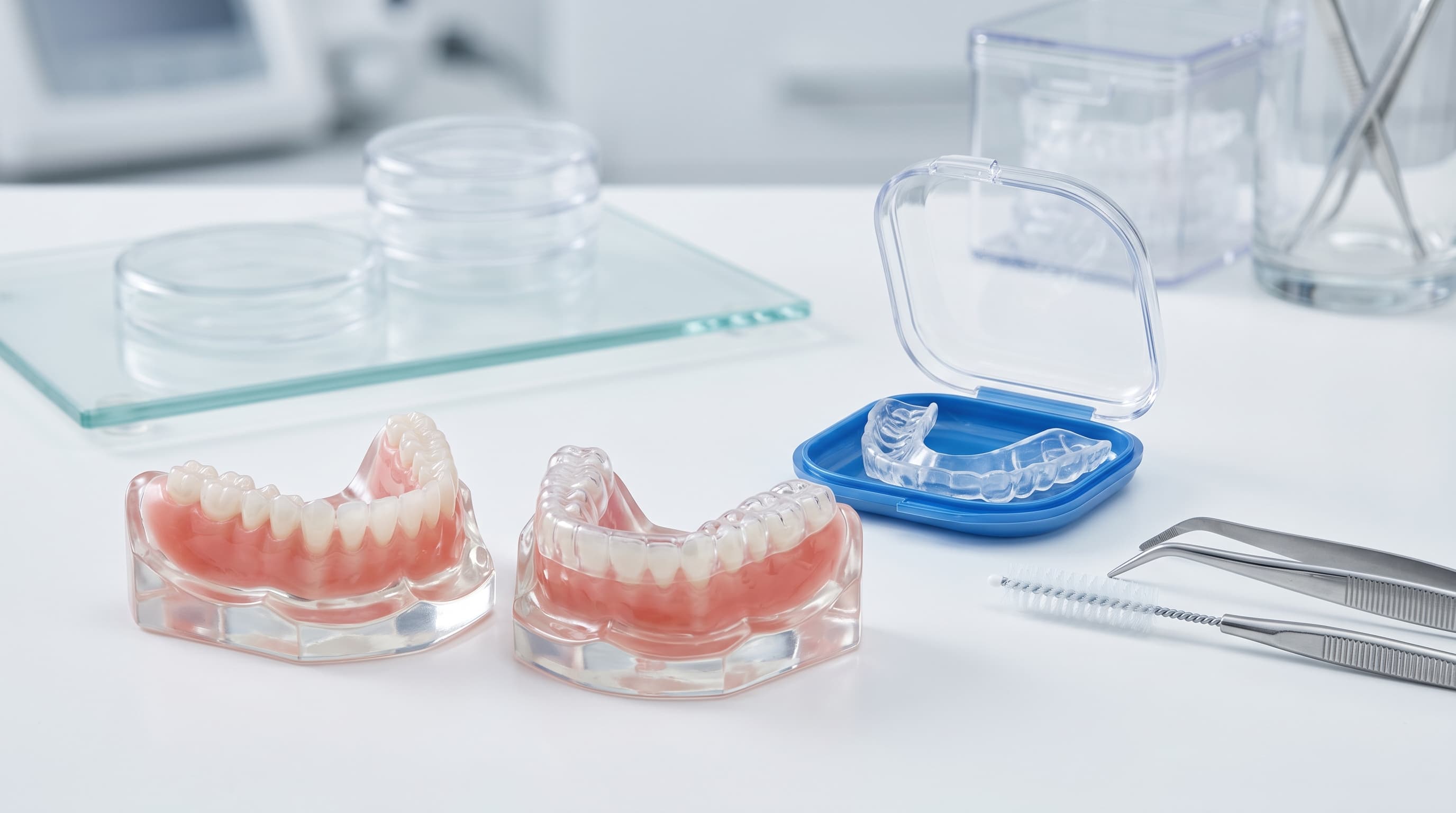
If you need a night guard for teeth grinding in Wylie, TX, you're not alone. Bruxism (the clinical term for clenching and grinding) has surged since 2020. A study published in the Journal of Clinical Medicine found that self-reported bruxism increased by nearly 60% during the pandemic, driven by stress, disrupted sleep, and increased screen time. That wave hasn't receded. Dr. Esther Jeong at Willow Family Dentistry in Wylie, TX prescribes more custom night guards now than at any point in her 15+ years of practice.
The problem with bruxism isn't the grinding itself. It's the cumulative damage: worn enamel that never grows back, cracked teeth that need crowns, TMJ dysfunction that causes daily headaches, and dental bills that dwarf the cost of the guard that would have prevented all of it. This guide covers how to tell if you grind, why custom guards outperform drugstore alternatives, what they cost, and what to expect when Dr. Jeong fits yours.
How Do You Know If You Grind Your Teeth?
Most bruxism happens during sleep, which means most grinders don't know they're doing it until the damage shows up. The ADA estimates that 10-15% of adults grind severely enough to cause clinical damage, but milder grinding that still wears enamel over time affects a much larger percentage. Here are the six signs Dr. Jeong looks for at every checkup.
Worn, flattened, or chipped teeth. If your teeth used to have sharp cusp tips and now the biting surfaces are smooth and flat, grinding has worn through the enamel. Front teeth that look shorter than they used to are another telltale sign. Dr. Jeong can identify wear patterns at a routine exam before you notice them yourself.
Morning jaw soreness or stiffness. If your jaw muscles feel tight, tired, or sore when you wake up, especially around the masseter (the large muscle at the angle of your jaw) or the temporalis (the fan-shaped muscle at your temple), your muscles have been working all night. This soreness often fades by mid-morning, which is why patients dismiss it as "sleeping wrong."
Headaches that start at the temples. Tension headaches concentrated at the temples upon waking are one of the most common bruxism symptoms and one of the most frequently misdiagnosed. Patients treat them with ibuprofen for years without connecting them to their teeth. According to the Mayo Clinic, bruxism-related headaches can be as frequent as daily and are often confused with tension-type headaches or migraines.
Tooth sensitivity that appeared gradually. As enamel wears thin from grinding, the dentin underneath becomes exposed. Cold drinks, hot foods, and even cold air trigger sensitivity that wasn't there a year ago. If multiple teeth on both sides became sensitive around the same time, grinding is a stronger suspect than cavities, which tend to affect one tooth at a time.
Jaw clicking, popping, or limited opening. Bruxism overloads the temporomandibular joint, leading to TMJ dysfunction over time. The joint starts clicking, the jaw deviates when opening, or you can't open as wide as you used to. These are signs the grinding has progressed beyond enamel damage to joint damage.
Your partner hears it. Grinding can be audible. If the person sleeping next to you has mentioned hearing your teeth scrape at night, that's diagnostic. Not all grinding is loud (clenching is silent), but audible grinding confirms the habit definitively.
Related: Grinding causes TMJ problems. Here's how to manage them. → TMJ Exercises That Actually Work: A Dentist's Routine
Why Do Custom Night Guards Outperform Drugstore Guards?
The $20-$40 boil-and-bite guards from the drugstore seem like a reasonable first step. They're cheap, they're available tonight, and they put something between your teeth. But there are specific clinical reasons they underperform custom guards, and for many patients they actually make things worse.
| Factor | Custom Lab Guard | OTC Boil-and-Bite |
|---|---|---|
| Fit | Precision-milled from digital scan of your teeth | Generic shape molded with hot water |
| Material | Hard acrylic or dual-laminate (hard outside, soft inside) | Soft EVA foam |
| Bite Distribution | Adjusted to distribute forces evenly across all teeth | Uneven contact; some teeth bear more force than others |
| Muscle Response | Hard surface reduces clenching intensity | Soft material can increase clenching (chewy texture triggers bite reflex) |
| Durability | 2-5 years with proper care | 3-6 months before deformation |
| TMJ Impact | Designed to support jaw position and reduce joint strain | Can worsen TMJ by altering bite in unpredictable ways |
| Cost | $300-$600 | $20-$40 |
The critical issue with soft OTC guards is the muscle response. Research cited by the Healthline dental guide shows that soft, chewy materials can actually stimulate the jaw muscles to clench harder, like chewing gum in your sleep. A hard acrylic custom guard has the opposite effect: the smooth, rigid surface discourages the clenching reflex and distributes forces across the entire arch rather than concentrating them on a few teeth.
The fit difference matters for a different reason: retention. A custom guard that snaps onto your teeth precisely stays in place all night. A boil-and-bite guard with a loose fit falls out, gets pushed aside by your tongue, or requires you to clench to hold it in place, which defeats the purpose entirely. Patients who tried OTC guards and gave up because "they don't stay in" weren't failing. The product was failing them.
How Much Does a Custom Night Guard Cost in Wylie, TX?
A custom night guard from Dr. Jeong costs $300-$600 depending on the material and design. Hard acrylic guards (the standard for moderate-to-severe grinders) fall at the lower end. Dual-laminate guards (hard acrylic outside for durability, soft interior for comfort) cost slightly more. The fee includes the digital scan, lab fabrication, delivery appointment, and bite adjustment.
Insurance coverage varies but is improving. Many dental PPO plans cover night guards under "major" or "preventive/appliance" benefits at 50-80%. Some plans classify them under a separate "occlusal guard" benefit. The typical insurance payout is $150-$400, reducing your out-of-pocket to $100-$300. Dr. Jeong's team verifies your specific coverage before ordering the guard.
The cost-avoidance math is straightforward. A custom guard at $300-$600 protects teeth that cost $1,000-$2,000 each to crown if they crack from grinding. A single cracked molar that needs a crown costs more than the guard. Two cracked teeth exceed the guard cost three to four times over. The ADA identifies night guards as one of the most cost-effective preventive appliances in dentistry for exactly this reason.
HSA and FSA accounts cover custom night guards as a qualified medical expense. The pre-tax savings reduce your effective cost by an additional 20-30% depending on your bracket.
Related: What grinding does to your enamel over time. → Teeth Sensitive to Cold Suddenly? 8 Causes and Fixes
What Does Getting a Custom Night Guard Involve?
The process takes two appointments, about a week apart, and each one is short.
Visit 1 (15 minutes): Dr. Jeong examines your teeth for grinding damage, checks your TMJ, and takes a digital scan of your upper and lower arches. The scan is quick (3 minutes), comfortable (no gagging), and captures your exact tooth anatomy to the fraction of a millimeter. She discusses which guard type matches your grinding pattern: hard acrylic for heavy grinders, dual-laminate for patients who want more comfort, or a thinner design for mild clenchers.
The scan is sent to a dental lab that mills or 3D-prints your guard from the digital model. Lab turnaround is typically 5-7 business days.
Visit 2 (15 minutes): Dr. Jeong fits the finished guard, checks the bite contact points with articulating paper, and adjusts any high spots so the forces distribute evenly across all teeth. She shows you how to insert and remove it, how to clean it (cool water and a toothbrush, no hot water which warps the acrylic), and how to store it in the ventilated case that comes with it.
You wear the guard every night from that point forward. According to the Mayo Clinic, consistent nightly use is essential because even occasional nights without the guard allow the grinding forces to resume their damage to enamel, restorations, and the TMJ.
Can a Night Guard Help With TMJ Symptoms?
Yes, and it's one of the primary reasons Dr. Jeong prescribes them. A properly fitted night guard does two things for the TMJ simultaneously: it reduces the clenching force by 40-60% (the jaw muscles can't generate maximum force against a hard, smooth surface the way they can against opposing teeth), and it positions the jaw in a slightly open, neutral position that takes pressure off the joint disc and ligaments.
Patients with grinding-related TMJ symptoms (morning jaw soreness, clicking, headaches) typically notice improvement within 2-4 weeks of consistent nightly wear. The guard doesn't cure TMJ dysfunction, but it removes the primary mechanical overload that drives it. Combined with the TMJ exercises Dr. Jeong prescribes, the guard-plus-exercise protocol resolves or significantly improves symptoms in the majority of patients.
For patients with more advanced TMJ issues (disc displacement, crepitus, limited opening that doesn't respond to conservative treatment), Dr. Jeong may recommend a specialized orthotic appliance rather than a standard night guard. The iCAT 3D scan can image the joint directly to evaluate condyle position and disc anatomy, guiding the decision between a standard guard and a more targeted appliance.
Grinding, Clenching, or Jaw Soreness?
Dr. Jeong evaluates your wear patterns, checks your TMJ, and determines whether a custom night guard is the right solution. Digital scan takes 3 minutes. Guard is ready in about a week.
Request an Appointment →What Else Can You Do to Reduce Grinding?
A night guard protects your teeth during sleep, but it doesn't address the underlying cause of bruxism. Combining the guard with behavioral strategies reduces the frequency and intensity of grinding over time.
Daytime awareness is the starting point. Most grinders also clench during the day, especially during concentration (driving, working, scrolling). The "lips together, teeth apart" habit retrains your resting jaw posture. Set a phone reminder every 2 hours for the first two weeks: when the reminder goes off, check your jaw. If your teeth are touching, separate them. This simple awareness practice reduces daytime clenching significantly.
Stress management addresses the most common trigger. Bruxism correlates directly with perceived stress levels according to the Journal of Clinical Medicine study on pandemic-era bruxism. Exercise, adequate sleep, and whatever stress-reduction practice works for you (meditation, journaling, walking, therapy) aren't just wellness advice. They're bruxism treatment.
Caffeine and alcohol reduction helps. Both substances increase grinding frequency during sleep. Limiting coffee after noon and alcohol within 3 hours of bedtime measurably reduces nocturnal bruxism intensity in most patients.
A night guard for teeth grinding in Wylie, TX costs $300-$600, lasts 2-5 years, and protects thousands of dollars in dental work from grinding damage. It's one of the simplest, most cost-effective preventive investments in dentistry. If you wake up with jaw soreness, headaches at your temples, or your partner hears you grinding at night, schedule an evaluation with Dr. Jeong at Willow Family Dentistry. The exam takes 15 minutes, the digital scan takes 3, and the guard is ready in about a week.
Protect Your Teeth While You Sleep
Dr. Jeong evaluates your grinding damage, checks your TMJ, and fits a custom guard in two short visits. Insurance often covers 50-80%.
Request an Appointment →Questions about night guards or grinding?
Call (972) 881-0715 →Dr. Esther B. Jeong, DDS
DDS · Willow Family Dentistry
Wylie family dentist with 15+ years of experience providing gentle, judgment-free dental care.
Frequently Asked Questions
Was this article helpful?
You may also like

Have a dental question?
Schedule a consultation and get personalized answers from Dr. Jeong.
Call us
(972) 881-0715
Hours
Mon – Thu: 9am – 5pm
Fri: By Appointment
Location
1125 W FM 544, Wylie
Emergency? Same-day appointments available.