Invisalign Dentist in Wylie TX: How to Choose
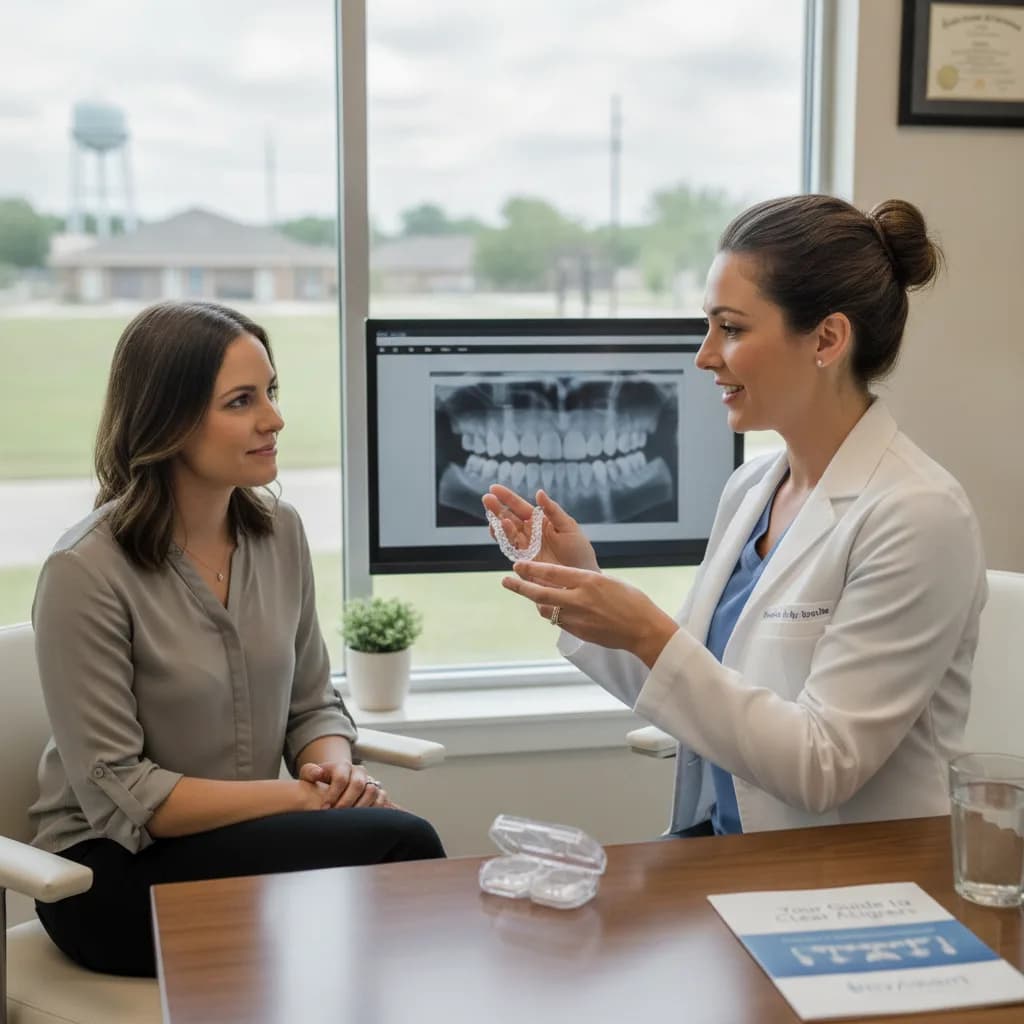
Clear aligners have made straightening teeth more discreet and convenient than ever, but the results depend far more on the provider than on the brand of aligner. Choosing the right Invisalign dentist in Wylie TX is the single biggest factor in whether you finish with a healthy, well-aligned bite. This guide explains what to look for and what to ask.
What Does an Invisalign Dentist Actually Do?
An Invisalign dentist diagnoses your bite, plans the full course of tooth movement, and supervises treatment from start to finish using a series of custom clear aligners. The dentist's planning and oversight, not the aligners themselves, determine the result.
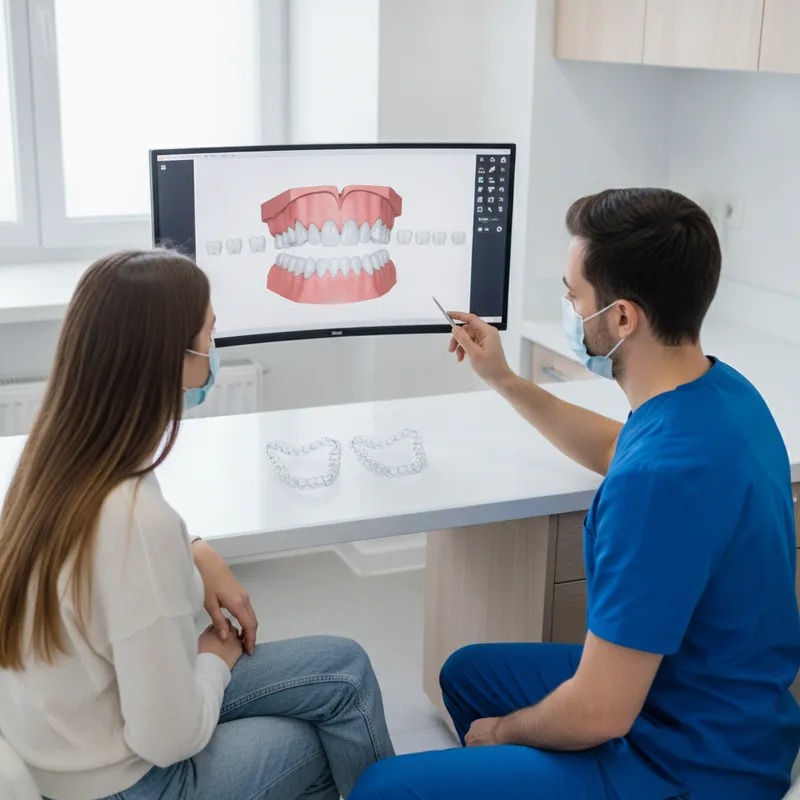
It is tempting to think of clear aligners as a product you simply buy, but they are really a tool a trained dentist uses to execute a carefully sequenced treatment plan. The dentist maps out exactly how each tooth should move and in what order, designs the series of aligners to achieve it, and monitors progress to make adjustments when teeth do not track as predicted. That clinical judgment is what separates a good outcome from a disappointing one. Aligners are only as effective as the plan behind them, which is why your choice of provider matters more than any marketing claim.
According to the American Dental Association, orthodontic treatment is about far more than appearance, a properly aligned bite is easier to clean, distributes chewing forces evenly, and reduces wear on the teeth and jaw joints. That health dimension is exactly why supervision by a qualified dentist matters.
Why Does Provider Experience Matter So Much?
Experience matters because clear aligners cannot correct every case equally well, and recognizing the limits is a skill. An experienced provider knows which cases aligners handle beautifully, which need extra techniques, and which call for traditional braces instead.
Simple-to-moderate crowding and spacing are well within the range of clear aligners, but complex bite problems, significant rotations, or teeth that need to move vertically can challenge them. A provider who has treated many cases can tell early whether your case is a good fit, and can use supporting techniques, small tooth-colored attachments, refinements, or elastics, to achieve movements that aligners alone would struggle with. Studies indicate that clear aligners can successfully treat roughly 90% of common alignment issues, but success rates climb significantly when an experienced clinician plans and supervises the case, with on-time completion improving by an estimated 20 to 30%. Inexperience tends to show up as treatment that stalls, takes far longer than promised, or finishes with a bite that looks straight but does not function well.
How Do Dentist-Supervised Aligners Compare to Mail-Order Kits?
Dentist-supervised aligners include in-person exams, x-rays, and hands-on monitoring, while mail-order kits skip all of that. The supervision catches problems early and protects your long-term oral health, which remote kits cannot do.
| Feature | Dentist-Supervised | Mail-Order Kit |
|---|---|---|
| In-person exam & x-rays | Yes | No |
| Checks gum & bone health first | Yes | No |
| Hands-on monitoring | Ongoing | None |
| Can adjust mid-treatment | Yes | No |
| Handles complications | Yes | No |
The gap is not about the plastic; the aligners themselves can be similar. It is about everything around them. A dentist confirms your gums and bone are healthy enough to move teeth safely, which is essential because moving teeth through diseased gum tissue can cause permanent damage, a risk orthodontic research repeatedly underscores. Mail-order models skip that safeguard entirely, which is why dental organizations have raised concerns about them. If a problem develops mid-treatment, a supervising dentist catches and corrects it; a remote kit simply ships the next tray.
What Should You Ask a Potential Invisalign Provider?
Ask how many cases they have treated, whether they handle your specific bite issue in-house, what happens if teeth do not track as planned, and whether retainers and refinements are included. The answers reveal both experience and transparency.
A confident, experienced provider will happily discuss their case volume and show you examples of treatment similar to yours. Ask specifically what their plan is if a tooth does not move as predicted, refinements are a normal part of treatment, and you want a provider who plans for them rather than treating them as a surprise. Clarify whether the quoted treatment includes the final retainers that hold your results, since teeth naturally drift back without them. It is also worth asking whether they offer other cosmetic services, because straightening is often one part of a broader smile plan. Transparency in these answers is itself a good sign.
Is Clear Aligner Treatment Right for You?
Most teens and adults with mild to moderate crowding, spacing, or bite issues are good candidates for clear aligners, provided their gums and teeth are healthy. A consultation with exam and imaging is the only way to know for certain.
Good candidates are motivated to wear the aligners consistently, since they only work when worn 20 to 22 hours a day, and studies link wear time below about 20 hours to noticeably slower progress. Healthy gums and teeth are a prerequisite, which is why active gum disease or untreated decay must be addressed first. Age is rarely a barrier on its own, adults of all ages straighten their teeth successfully, and orthodontic specialists report that adult treatment now makes up a substantial and growing share of cases, and the discreet appearance of clear aligners makes treatment appealing to professionals who would not consider metal braces. The consultation exists to confirm your gums and bone can support tooth movement and to map out a realistic plan and timeline for your specific case.
Why Is Compliance So Important With Clear Aligners?
Clear aligners only work when you wear them, so compliance is the patient's biggest responsibility. Wearing them the recommended 20 to 22 hours a day keeps treatment on schedule; inconsistent wear is the leading cause of delays and disappointing results.

This is the trade-off for the convenience of removable aligners. Because you can take them out to eat and brush, the discipline to put them right back in falls to you. Teeth move on the schedule the aligners dictate, and skipping hours means teeth do not reach the planned position before the next tray, which can throw off the entire sequence. The good news is that consistent wear makes treatment predictable, and a supervising dentist will track your progress and coach you if compliance slips. Keeping a routine, aligners out only for meals and oral care, is the single most reliable predictor of finishing on time. Pairing that with good professional cleanings during treatment keeps your teeth and gums healthy as they move.
What Happens After Treatment Ends?
After active treatment, retainers are essential to keep teeth from drifting back. Teeth have a natural tendency to relapse toward their old positions, so wearing a retainer as directed, often nightly long-term, is what protects your investment.
Many people are surprised to learn that orthodontic results are not permanent on their own. The same biological process that allowed teeth to move also allows them to drift back if nothing holds them in place. A retainer, worn on the schedule your dentist recommends, prevents that relapse. This is also why it matters whether retainers are included in your treatment plan from the start. A provider who treats the retention phase as an afterthought is setting you up to lose the results you paid for. Think of the retainer as the final, permanent step of treatment rather than an optional extra, and your straightened smile can last for decades.
How Does Clear Aligner Treatment Actually Work?
Clear aligners move teeth through a series of custom trays, each shaped slightly differently from the last. You wear each tray for one to two weeks, and the gentle, continuous pressure gradually guides teeth into their planned positions.
The science behind it is the same biological process that powers traditional braces: controlled, sustained force prompts the bone around a tooth to remodel, allowing the tooth to move and then stabilize in its new position. The difference is that aligners deliver that force through smooth, removable plastic rather than brackets and wires. Each tray represents one small step in a precisely mapped sequence, which is why the planning stage is so important, the dentist is essentially choreographing dozens of tiny movements in the right order. Small tooth-colored attachments are sometimes bonded to certain teeth to give the aligners better grip for trickier movements, and they are removed when treatment ends.
Because the trays are removable, you take them out to eat and to brush and floss, then put them right back in. That removability is the comfort and hygiene advantage of aligners over fixed braces, but it is also why the result depends so heavily on consistent wear. The system is elegant, but it is not automatic.
What Should You Expect at the First Consultation?
At the first visit, the dentist examines your teeth and gums, takes x-rays and often a digital scan, and discusses your goals. From that, they determine whether you are a candidate and outline a realistic plan, timeline, and what the result should look like.
The digital scan is often the highlight, because many practices can show you a preview of how your teeth are projected to look at the end of treatment, which makes the plan tangible. Just as importantly, the dentist screens for anything that needs to be handled first, untreated decay or active gum disease must be resolved before teeth can be moved safely. This is also your chance to ask the questions covered earlier in this guide and to gauge how clearly the provider communicates. A good consultation leaves you understanding not just that your teeth can be straightened, but how, over what timeframe, and at what point retainers take over to protect the result.
If straightening is part of a larger goal, this is the moment to say so. Many patients combine alignment with whitening or other cosmetic work, and planning them together produces a more cohesive final result than tackling each in isolation.
Finding the Right Invisalign Dentist in Wylie TX
The right Invisalign dentist in Wylie TX combines real case experience, thorough in-person evaluation, honest communication about what aligners can and cannot do, and a plan that includes retainers from the outset. Those qualities matter far more than any advertised price or brand name.
When you meet a provider who examines your mouth carefully, explains your specific case in plain language, and is upfront about the timeline and the retention phase, you have found someone treating your alignment as the health and cosmetic investment it is. That is exactly the standard the team at Willow holds for clear aligner care, and it is the surest path to a result that stays straight for years.
Results may vary. Please consult with Dr. Jeong for personalized treatment recommendations.
Curious whether clear aligners are right for you? Call (972) 881-0715 or contact our team.
Dr. Esther B. Jeong, DDS
DDS · Willow Family Dentistry
Wylie family dentist with 15+ years of experience providing gentle, judgment-free dental care.
Frequently Asked Questions
Was this article helpful?
You may also like



Have a dental question?
Schedule a consultation and get personalized answers from Dr. Jeong.
Call us
(972) 881-0715
Hours
Mon – Thu: 9am – 5pm
Fri: By Appointment
Location
1125 W FM 544, Wylie
Emergency? Same-day appointments available.