Dental Implant Cost in Wylie TX: A Full Breakdown
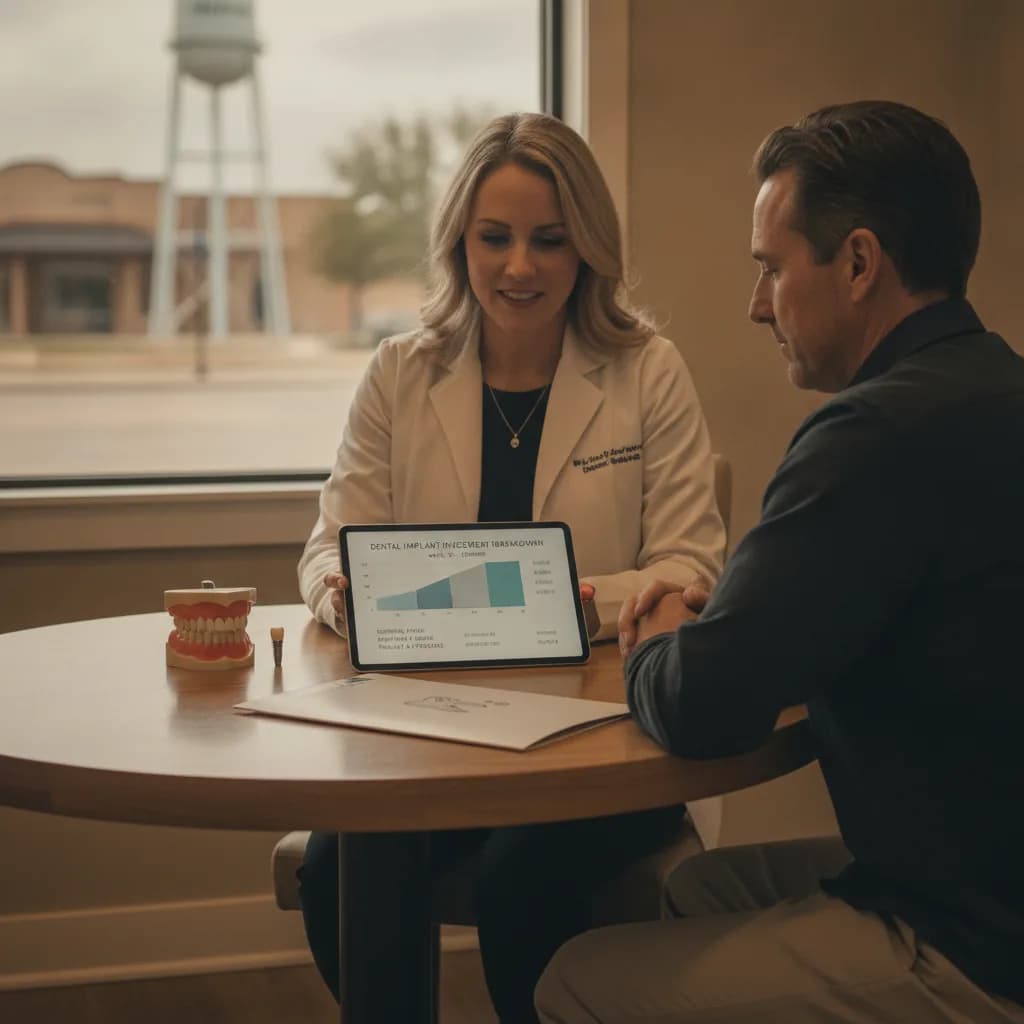
When people ask about dental implant cost in Wylie TX, they usually expect a single number, but an implant is really a series of separate components and procedures, each with its own cost driver. Understanding that line-item breakdown is the key to reading any estimate you are given and knowing exactly what you are paying for.
What Makes Up the Cost of a Dental Implant?
A complete dental implant has three main parts: the implant post placed in the jaw, the abutment that connects to it, and the crown on top. The total cost reflects these components plus any imaging, extractions, or bone work needed to prepare the site.
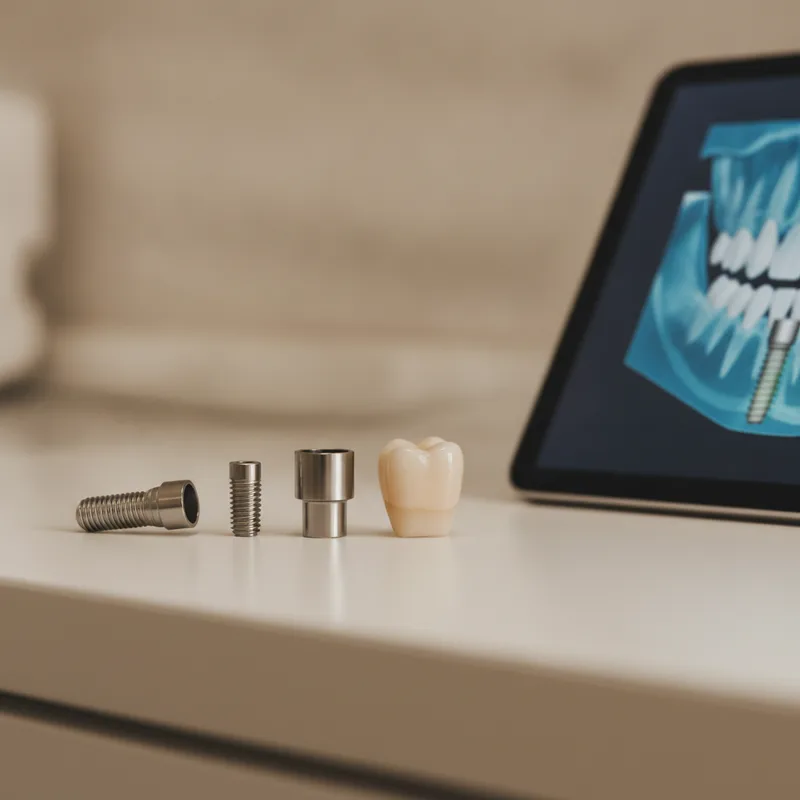
It helps to think of an implant not as one item but as a small construction project. The post is the foundation, anchored in the bone. The abutment is the connector. The crown is the visible, functional tooth. On top of those three core parts, your estimate may include diagnostic imaging, the surgical placement itself, and any preparatory work the site needs first. When two practices quote very different numbers, it is almost always because their estimates include different combinations of these line items, which is why comparing a single headline figure can be misleading. The most useful thing you can do as a patient is ask for the estimate broken out by component, so you can see precisely what is and is not included and compare apples to apples between practices.
According to the American Dental Association, implants have a long-term success rate above 95% at 10 years, which is part of why they are considered a strong long-term investment despite a higher upfront cost than alternatives.
What Are the Individual Line Items?
A typical implant estimate breaks into distinct line items: consultation and imaging, any extraction, bone grafting if needed, the implant post, the abutment, and the final crown. Knowing each helps you understand and compare quotes.
| Line Item | What It Covers | Always Needed? |
|---|---|---|
| Consultation & 3D imaging | Exam and a cone-beam scan to plan placement | Yes |
| Tooth extraction | Removing a failing tooth before placement | Only if a tooth remains |
| Bone graft | Rebuilding bone to support the implant | Only if bone is insufficient |
| Implant post | The titanium screw placed in the jaw | Yes |
| Abutment | The connector between post and crown | Yes |
| Crown | The custom visible tooth on top | Yes |
The three "always needed" surgical and restorative components, post, abutment, and crown, form the baseline of every implant. The variable items, extraction and bone grafting, are what cause two patients to receive very different estimates for what sounds like the same procedure. If you need a tooth removed first, or a bone graft to rebuild the site, those add both time and cost.
Why Do Bone Grafts and Extractions Add to the Cost?
Bone grafts and extractions are preparatory steps that some patients need and others do not. A graft rebuilds jawbone that has shrunk after tooth loss so the implant has enough support, and an extraction removes a failing tooth before the site can heal.
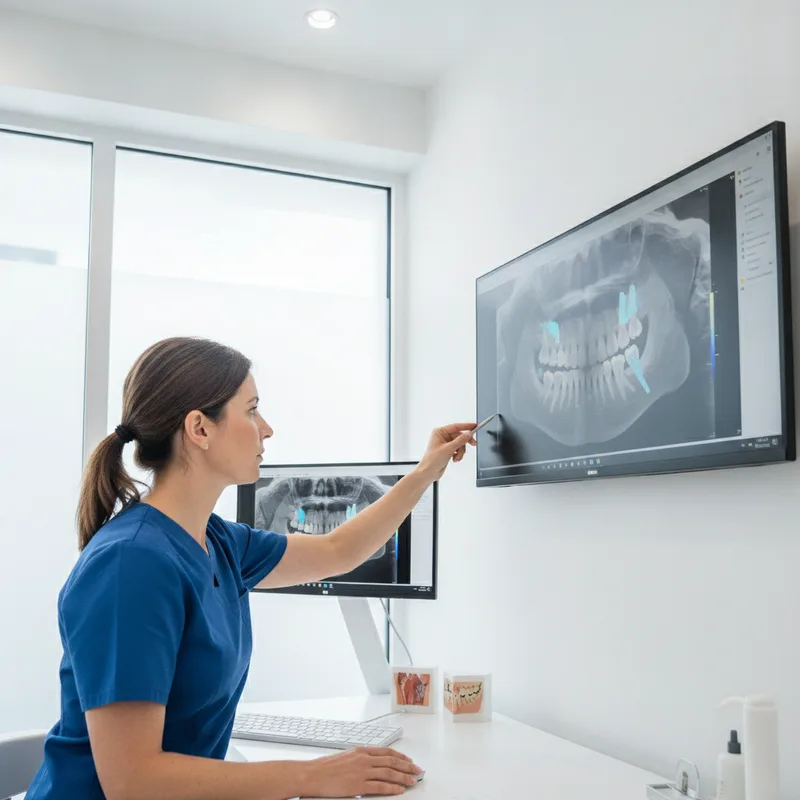
Bone loss is extremely common after a tooth is gone, because the jaw needs the stimulation of a tooth root to maintain its volume. The clinical literature notes that the jaw can lose up to 25% of its width within the first year after an extraction, and as much as 4 millimeters of height over time. When that happens, a graft restores enough bone for the implant to anchor securely, which is essential for long-term success but does add a separate procedure and a healing period of several months before the implant can be placed. The graft material gradually integrates with your own bone, creating a stable base. Patients who get an implant promptly after losing a tooth sometimes avoid grafting entirely, which is one reason acting sooner can reduce total cost.
Extractions follow the same logic. If the tooth being replaced is still in place, it must come out and the socket must heal, sometimes with a graft to preserve the bone, before or during implant placement. None of these steps are padding; each one is there because the implant cannot succeed without a healthy, well-supported site. A dentist who skips necessary preparation to lower the headline price is setting the implant up to fail, which ends up costing far more to correct.
How Does an Implant Compare to Other Tooth Replacements?
An implant costs more upfront than a bridge or denture, but it lasts far longer and does not damage neighboring teeth. Over a lifetime, that durability often makes it the more economical choice despite the higher initial investment.
A traditional bridge relies on grinding down the healthy teeth on either side of the gap to serve as anchors, and it typically needs replacement after 10 to 15 years, and studies show implants outlast bridges in roughly 90% of cases at the 10-year mark. A denture is the least expensive option upfront but does nothing to preserve the jawbone and may need relining or replacement over time. An implant stands alone, preserves the bone, and frequently lasts decades, so while the upfront investment is higher, the cost per year of service is often lower. For patients replacing several teeth, a full reconstruction plan may combine implants with other restorations.
Does Insurance Cover Dental Implants?
Coverage varies widely. Many dental plans historically excluded implants but increasingly cover a portion, often treating the crown like other major restorative work. The surgical placement may be covered differently, so a pre-treatment estimate is essential.
Because an implant spans surgical and restorative categories, different parts of it may fall under different benefit rules, and some plans still classify the implant itself as elective. The practical step is to have the office submit a pre-treatment estimate to your insurer, which returns exactly what they will pay before you commit. Patients without coverage often combine pre-tax HSA or FSA dollars with financing to manage the cost, and phasing treatment across benefit years can also help when an annual maximum would otherwise be exhausted. Because an implant naturally unfolds over several months, the calendar often works in your favor for spreading both treatment and payment.
How Can You Make an Implant More Affordable?
Several strategies lower the real cost: acting before bone loss requires grafting, using pre-tax HSA or FSA funds, financing the balance over time, and asking about a practice membership plan. Combining these often makes an implant achievable on most budgets.

Timing is the most overlooked lever. Replacing a tooth before the bone shrinks can eliminate the need for a graft, removing an entire procedure from the estimate. Beyond that, financing spreads the investment into manageable monthly payments, pre-tax accounts discount it by your tax rate, and a membership plan can layer on a percentage discount. The CDC emphasizes that tooth loss affects overall health, not just appearance, so investing in a durable replacement has value well beyond the smile, including the ability to chew a full range of foods and the preservation of facial structure that bone loss would otherwise erode. Willow provides a clear, itemized estimate so you can see exactly which line items apply to your case and plan accordingly.
What Happens During the Implant Process?
The implant process unfolds in stages over several months, because the bone needs time to fuse to the post. A typical timeline runs from initial placement, through a healing period of three to six months, to the final crown.
After any needed extraction or graft has healed, the dentist surgically places the titanium post into the jawbone in a procedure most patients find more comfortable than they expect. Over the following months, a process called osseointegration occurs: the bone grows around and bonds to the post, creating a foundation as stable as a natural tooth root. Once that fusion is confirmed, the abutment is attached and an impression is taken for the custom crown, which a lab fabricates to match your surrounding teeth in shape and shade. The crown is then seated, completing the restoration.
Each stage is deliberately spaced to let the body heal, which is why an implant is a months-long process rather than a single appointment. Understanding that timeline also clarifies the cost structure: you are paying for several distinct appointments, a surgical placement, and a lab-made restoration. The reward for that patience is a replacement tooth that looks, feels, and functions like the original and is cared for in exactly the same way.
How Do You Protect Your Investment in an Implant?
An implant can last decades, but only with the same care a natural tooth needs: thorough daily brushing and flossing, routine professional cleanings, and protection against grinding. Neglect is the leading cause of premature implant problems.
While the implant post itself cannot decay, the gum and bone around it can still develop disease if plaque builds up, a condition called peri-implantitis that mirrors gum disease around natural teeth. Consistent cleanings and regular checkups let the dentist monitor the implant and address any early inflammation before it threatens the bone. If you grind your teeth, a night guard shields both the implant crown and your natural teeth from the excessive force that can loosen or fracture restorations over time.
Choosing your provider carefully matters just as much, because implant success depends heavily on precise planning and placement. A practice that uses 3D cone-beam imaging to map the bone and plan the angle of placement, as Willow does, gives the implant the best possible chance of lasting, which is ultimately what protects the money you invest in it. With sound placement and simple daily care, an implant is among the most durable and worthwhile investments in all of dentistry.
Are You a Good Candidate for a Dental Implant?
Most adults with a missing or failing tooth are candidates for an implant, provided they have healthy gums and enough bone, or are willing to have a graft. General health, smoking, and uncontrolled conditions like diabetes can affect healing and are part of the evaluation.
The candidacy assessment is part of why the consultation and 3D imaging line item matters so much: it tells the dentist whether the bone is sufficient, whether a graft is needed, and how to position the implant to avoid nerves and sinuses. Healthy gums are important too, since active gum disease must be brought under control first. Lifestyle factors play a role as well, smoking, for instance, slows healing and raises the risk of failure, so dentists often counsel patients to reduce or quit during the healing window. None of these factors necessarily rules out an implant; they simply shape the plan and timeline.
The best way to know where you stand is a consultation that includes imaging. From there, Willow can tell you whether you are ready for immediate placement or need a preparatory step first, and provide an itemized estimate reflecting your specific situation rather than a generic figure.
Results may vary. Please consult with Dr. Jeong for personalized treatment recommendations.
Want an itemized implant estimate for your situation? Call (972) 881-0715 or contact our team.
Dr. Esther B. Jeong, DDS
DDS · Willow Family Dentistry
Wylie family dentist with 15+ years of experience providing gentle, judgment-free dental care.
Frequently Asked Questions
Was this article helpful?
You may also like


Have a dental question?
Schedule a consultation and get personalized answers from Dr. Jeong.
Call us
(972) 881-0715
Hours
Mon – Thu: 9am – 5pm
Fri: By Appointment
Location
1125 W FM 544, Wylie
Emergency? Same-day appointments available.