Can Receding Gums Grow Back? The Honest Answer Is No, But
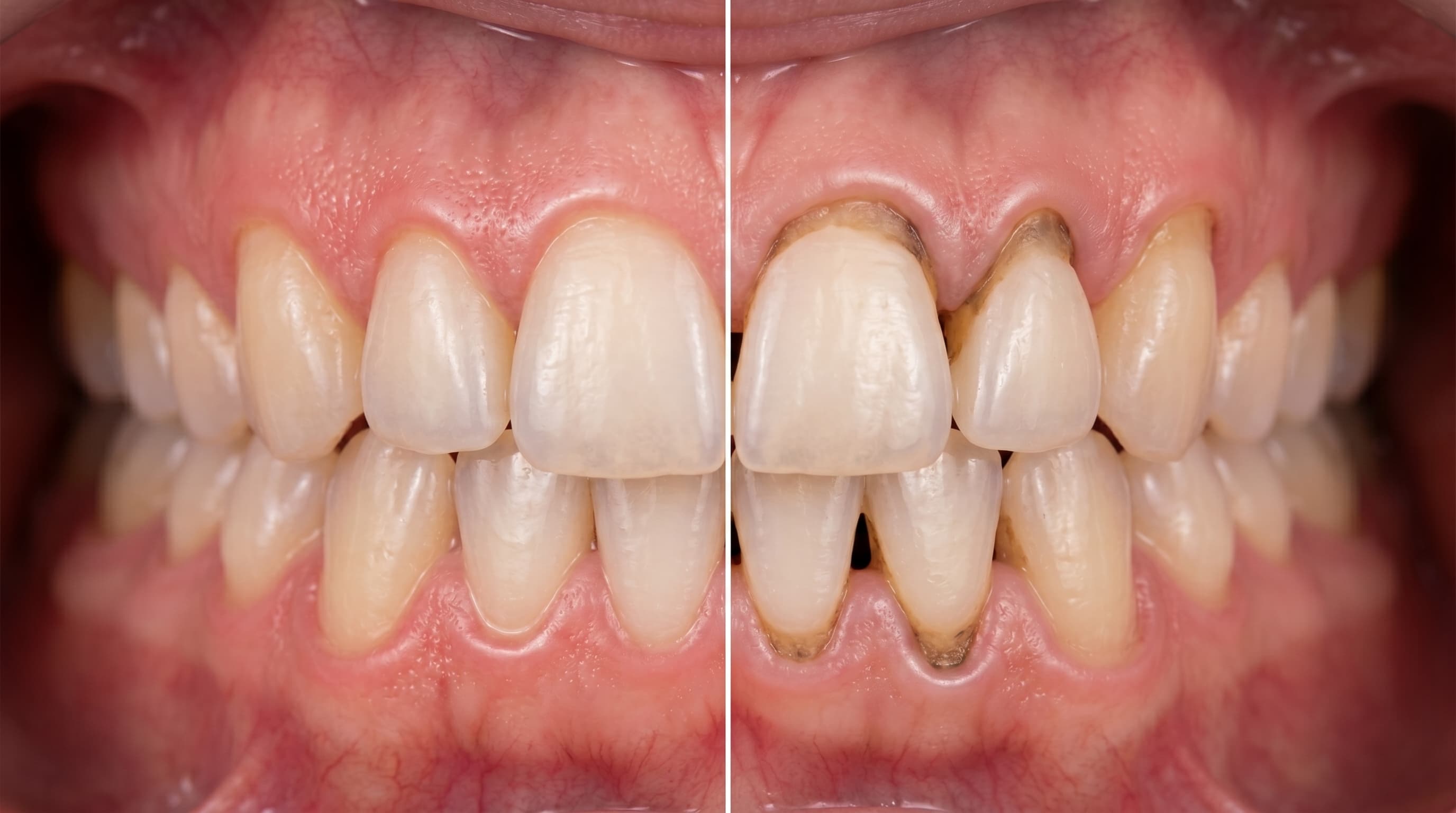
Can receding gums grow back? No. Once gum tissue recedes from its original position on the tooth, it does not regenerate on its own. Unlike bone, which can remodel, and unlike skin, which can heal a wound by growing new tissue across a gap, gum tissue doesn't have that capacity. The American Academy of Periodontology is clear on this: recession is permanent without intervention. That's the honest answer, and it's the one most dental websites bury under "maybe" and "in some cases" language that gives false hope.
But permanent doesn't mean untreatable. The gum tissue can't grow back, but it can be moved back. Gum grafting, pinhole surgical technique, and guided tissue regeneration are all proven procedures that restore gum coverage over exposed root surfaces. The results are real, lasting, and often dramatic. Dr. Esther Jeong at Willow Family Dentistry in Wylie, TX evaluates recession severity and recommends the approach that matches your anatomy, your goals, and your tolerance for recovery.
Stopping further recession is the realistic goal, and it starts with measuring where your gums are now. See gum disease treatment in Wylie.
Won't happen
Gum tissue growing back on its own
Absolutely possible
Moving healthy tissue back over the exposed root
Why Don't Receding Gums Grow Back on Their Own?
Gum tissue (gingiva) is a specialized connective tissue that attaches to the tooth root through a complex fiber system called the periodontal ligament. When this attachment is destroyed by disease, trauma, or mechanical force, the body doesn't rebuild it spontaneously. The tissue retracts and stabilizes at a lower position on the root. According to the ADA, gum recession affects over 50% of adults to some degree, making it one of the most common dental conditions that patients notice on their own.
Gum Tissue Heals by Contraction, Not Regeneration
The reason gums can't regenerate relates to the type of tissue involved. Gingival tissue heals by contraction and scar formation, not by regeneration. When you cut your skin, new skin cells migrate across the wound and close it. When gum tissue recedes, there's no wound edge to close. The tissue has simply moved to a new, lower position. There's nothing to heal because the body doesn't recognize the lower position as damage. It's the new normal.
This is frustrating to hear, but understanding it prevents patients from wasting time on products marketed as "gum regrowth" solutions (they don't exist) and focuses attention on the treatments that actually work.
What Causes Gum Recession?
Recession has multiple causes, and most patients have more than one contributing factor. Identifying what caused your recession determines both the treatment approach and the long-term prevention strategy.
1. Aggressive Brushing
Aggressive brushing is the most common cause in patients without gum disease. Scrubbing with a hard-bristled brush or applying excessive pressure with any brush wears away the thin gum tissue at the gumline over years. The damage is typically worst on the canines and premolars on the side of your dominant hand (right-handers damage the left side more because the brushing angle creates more pressure there). According to the Mayo Clinic, switching to a soft-bristled brush with gentle circular motions rather than horizontal scrubbing prevents further recession in these patients.
2. Periodontal Disease
Periodontal disease (gum disease) destroys the attachment between gum and tooth through bacterial infection. As the disease progresses, both gum tissue and the underlying bone recede, exposing root surfaces and creating deeper periodontal pockets. Disease-driven recession is often accompanied by bleeding, swelling, and pocket depths of 4mm or greater.
3. Genetics and Thin Gum Tissue
Genetics play a significant role. Some people are born with thin, fragile gum tissue (thin biotype) that recedes more easily than thick tissue. Others have a high frenum attachment (the small fold of tissue connecting the lip or cheek to the gum) that pulls on the gumline and accelerates recession at specific teeth.
4. Grinding, Bite Forces, and Misalignment
Teeth grinding (bruxism) creates lateral forces on teeth that flex them microscopically at the gumline. Over time, these flexion forces cause abfraction lesions (small notches at the gumline) and contribute to tissue recession. Misaligned teeth or a traumatic bite that concentrates force on specific teeth can produce localized recession at those sites.
5. Tobacco Use
Tobacco use restricts blood flow to gum tissue, reducing its ability to maintain itself and recover from minor insults. Smokers have significantly higher recession rates than non-smokers at every age.
Related: Gum disease is a leading cause of recession. → Stages of Gum Disease: Gingivitis vs Periodontitis
Brushing, grinding, and gum disease look identical in the mirror but need different fixes. Book a gum evaluation with Dr. Jeong →
What Treatments Restore Gum Coverage?
Since gums can't grow back, the treatments work by moving existing tissue to cover the exposed root or by transplanting tissue from elsewhere in your mouth. Three main approaches are used in 2026, each with specific advantages.
Connective Tissue Gum Graft (The Gold Standard)
The most common and most predictable gum grafting technique. Dr. Jeong takes a small piece of connective tissue from underneath the palate (roof of your mouth) through a small flap incision and sutures it over the exposed root surface at the recession site. The transplanted tissue integrates with the existing gum, creating new, permanent coverage.
The success rate for connective tissue grafts exceeds 90% for root coverage. The procedure takes 45-90 minutes depending on how many teeth are treated. Recovery involves 1-2 weeks of soft-food diet and mild-to-moderate soreness at both the graft site and the palatal donor site. The palate heals within 2-3 weeks. The grafted tissue matures over 3-6 months, eventually blending seamlessly with the surrounding gum.
90%+
Root coverage success rate
45-90
Minutes in the chair
2-3
Weeks for the palate to heal
3-6
Months to fully mature
Pinhole Surgical Technique (PST)
A newer, minimally invasive alternative to traditional grafting. Instead of transplanting tissue from the palate, Dr. Jeong makes a tiny pinhole incision in the gum tissue above the recession site, loosens the tissue through the pinhole using specialized instruments, and gently repositions it downward to cover the exposed root. Collagen strips are placed through the pinhole to stabilize the tissue in its new position while it heals.
The advantages of PST: no palatal donor site (eliminating the most uncomfortable part of traditional grafting), no sutures at the recession site, faster recovery (most patients return to normal activities within 24-48 hours), and the ability to treat multiple teeth in a single session. The ADA recognizes PST as a viable alternative to conventional grafting for appropriate cases.
The limitation: PST requires adequate existing tissue above the recession to reposition. In cases where the tissue is too thin or the recession is too severe, traditional grafting is more predictable. Dr. Jeong evaluates your tissue thickness and recession depth to determine which technique will deliver the best result for your anatomy.
What PST gives you
- No palatal donor site
- No sutures at the recession site
- Back to normal in 24-48 hours
- Several teeth treated in one session
Where it falls short
It needs enough existing tissue above the recession to reposition. Very thin tissue or very deep recession is more predictable with a traditional graft.
Free Gingival Graft
Used when the goal is to thicken thin tissue rather than cover an exposed root. A thin strip of tissue is taken directly from the surface of the palate (not from underneath it, as in connective tissue grafts) and placed at the gumline. This technique builds a thicker band of attached gum tissue that resists future recession, even if it doesn't cover the existing exposure completely. It's often used as a preventive measure in patients with thin biotype tissue before recession becomes severe.
Comparing the Techniques Side by Side
| Technique | Best For | Recovery | Cost per Site |
|---|---|---|---|
| Connective Tissue Graft | Root coverage on 1-3 teeth, gold standard | 1-2 weeks soft diet | $600-$1,200 |
| Pinhole Surgical Technique | Multiple teeth, faster recovery, no palatal donor | 24-48 hours | $800-$1,500 |
| Free Gingival Graft | Thickening thin tissue, preventing future recession | 1-2 weeks | $500-$1,000 |
| AlloDerm (Donor Tissue) | Patients who want to avoid palatal harvest | 1-2 weeks | $700-$1,400 |
No chart can tell you which technique your tissue thickness allows. One exam can. See your treatment options →
How Do You Know When Recession Needs Treatment?
Not all recession requires surgical treatment. Mild recession (1-2mm) with no sensitivity, no active disease, and no cosmetic concern can be monitored at regular dental visits. Dr. Jeong measures recession at every exam and tracks whether it's stable or progressing.
Signs It's Time to Treat
Treatment is recommended when:
✓Sensitivity from exposed roots affects your daily life (cold foods, hot drinks, cold air all trigger discomfort)
✓The recession is progressing (measurements show the gumline is moving further down at each visit)
✓Root surfaces are developing decay (exposed roots lack the enamel protection that crown surfaces have and are more cavity-prone)
✓Aesthetic concern is significant (visible root exposure on front teeth that affects your confidence)
✓The recession has created a food-trapping area that's impossible to keep clean
Why Timing Changes the Outcome
A few gum problems do not fit that monitor-and-treat timeline. Gums that swell suddenly, bleed without being touched, or sit beside a tooth that throbs can point to an abscess rather than ordinary recession, and that is a same-day situation. Willow Family Dentistry holds openings for emergency dental care in Wylie, TX so an urgent gum infection gets evaluated before it spreads to the bone.
The AAP recommends treating recession before it progresses to the point where bone loss compromises the tooth's stability. A tooth with 4-5mm of recession and intact bone underneath is straightforward to graft. A tooth with 4-5mm of recession and significant bone loss underneath has a much less predictable outcome. Timing matters.
4-5mm recession, bone intact
Straightforward to graft
4-5mm recession, bone lost
Much less predictable outcome
Related: Recession often causes cold sensitivity. → Teeth Sensitive to Cold Suddenly? 8 Causes and Fixes
What Can You Do at Home to Stop Recession from Getting Worse?
You can't reverse recession at home, but you can stop it from progressing. The behavioral changes are simple but high-impact.
Switch to a Soft-Bristled Brush
Switch to a soft-bristled brush immediately. Medium and hard bristles contribute directly to mechanical recession. Use gentle circular motions or a quality electric toothbrush with a pressure sensor that alerts you when you're pushing too hard. Brush for 2 minutes twice daily. More isn't better. Brushing more aggressively or more often accelerates the problem.
Use a Desensitizing Toothpaste
Use a desensitizing toothpaste with potassium nitrate if exposed roots are sensitive. The potassium ions block nerve signal transmission in the exposed dentin tubules. It takes 2-4 weeks of consistent use to reach full effect. This manages the symptom without treating the cause, but it makes daily life more comfortable while you decide on treatment.
Address Grinding
Address grinding if you clench or grind. A custom night guard eliminates the flexion forces that contribute to recession at the gumline. If you already have recession from grinding, the guard prevents it from progressing further.
Treat Active Gum Disease
Treat gum disease if it's present. Recession driven by periodontal disease will continue as long as the infection is active. Scaling and root planing removes the bacterial colonies driving the inflammation. Once the disease is controlled, disease-related recession stabilizes.
The Bottom Line on Receding Gums
Can receding gums grow back? No. But the exposed root can be covered, the sensitivity can be eliminated, and the progression can be stopped. The treatments are well-established, the success rates exceed 90% for connective tissue grafting, and the recovery is more manageable than most patients expect. If you've noticed your gumline creeping upward or your teeth looking longer than they used to, schedule an evaluation with Dr. Jeong at Willow Family Dentistry. She'll measure the recession, identify the cause, and show you what treatment looks like for your specific teeth.
Gums Don't Grow Back. But They Can Be Restored.
Coverage rates exceed 90% with connective tissue grafting. Dr. Jeong measures your recession, pinpoints the cause, and shows you exactly what treatment looks like for your teeth before you commit to anything.
Book Your Visit at Willow Family Dentistry →Prefer to talk it through first? Call (972) 881-0715
Dr. Esther B. Jeong, DDS
DDS · Willow Family Dentistry
Wylie family dentist with 15+ years of experience providing gentle, judgment-free dental care.
Frequently Asked Questions
Was this article helpful?
You may also like


Have a dental question?
Schedule a consultation and get personalized answers from Dr. Jeong.
Call us
(972) 881-0715
Hours
Mon – Thu: 9am – 5pm
Fri: By Appointment
Location
1125 W FM 544, Wylie
Emergency? Same-day appointments available.