Invisalign Before and After: What Real Results Look Like
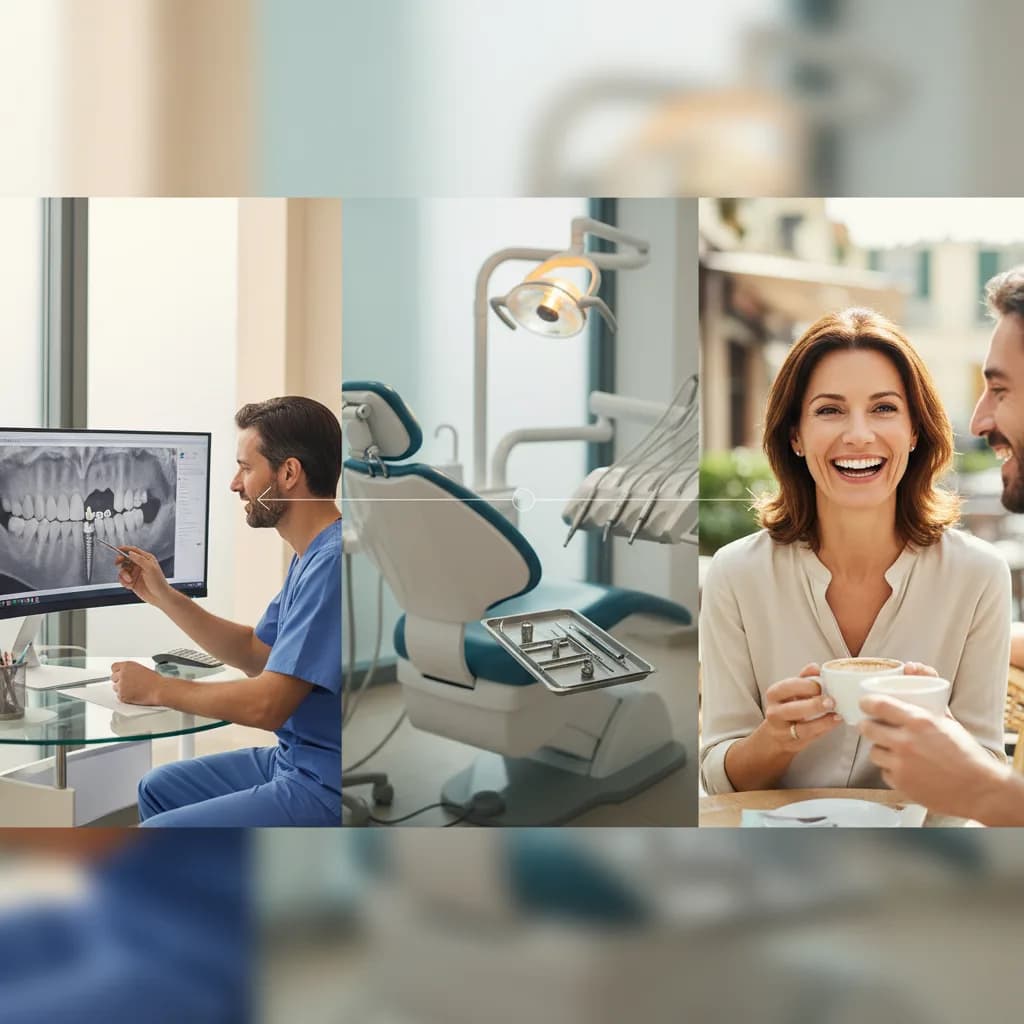
Searching for Invisalign before and after photos is how most patients start their aligner research, and it makes sense. You want to see what's actually possible before committing thousands of dollars and months of treatment. But the challenge with before-and-after galleries is selection bias: practices show their best results, not their average ones. The perfect smile transformations you see online represent the highlight reel, not the full patient population.
This guide takes a different approach. Instead of curated photos, it walks through what Invisalign realistically achieves by case complexity, where results meet expectations and where they fall short, what determines whether your outcome lands at the "wow" end or the "good but not perfect" end, and how Dr. Esther Jeong at Willow Family Dentistry in Wylie, TX tracks your progress through treatment to make sure you're on course.
What Do Real Invisalign Before and After Results Look Like?
Invisalign before and after results depend almost entirely on where your teeth start and how consistently you wear your aligners. The Align Technology system (the company behind Invisalign) has treated over 17 million patients worldwide since its introduction in 1998. That's a massive dataset. The results across that population aren't uniform. They cluster into three tiers based on case complexity.
Mild cases (minor crowding, small gaps, slight rotations) produce the most dramatic visual improvements because the starting point is close to ideal and the corrections are precise. These patients often say their teeth look "perfect" after treatment, and they're usually right. The before-and-after contrast is striking even though the actual tooth movement was relatively small.
Moderate cases (overlapping teeth, moderate crowding, open bites, crossbites involving a few teeth) produce clearly visible improvement. Teeth that were noticeably crooked become straight. Gaps close. The bite aligns. But these cases sometimes need refinement aligners (a second set of trays that fine-tune the result after the initial series is complete). The "after" photo looks great, but it might take 2-4 extra months of refinement to get there.
Complex cases (severe crowding, deep overbite, significant skeletal discrepancies) produce real improvement but may not achieve the Instagram-perfect result that mild cases deliver. Invisalign has expanded its capabilities significantly with features like SmartForce attachments and mandibular advancement, but there are biomechanical limits. Some complex cases get 80-90% of the way to ideal alignment with Invisalign and may need additional treatment (bonding, IPR, or even limited braces) to close the last 10-20%.
What Can Invisalign Realistically Fix?
Setting honest expectations is more useful than showing perfect photos. Here's what Invisalign handles well and where its limits show up, based on clinical evidence and the American Association of Orthodontists guidelines.
| Condition | Invisalign Effectiveness | Expected Outcome |
|---|---|---|
| Mild crowding (1-3mm) | Excellent | Near-perfect alignment in 6-9 months |
| Moderate crowding (4-6mm) | Very good | Significant improvement in 12-15 months, refinement likely |
| Spacing / gaps | Excellent | Gaps close predictably in 6-12 months |
| Overbite (mild-moderate) | Good | Measurable correction with precision wings, 12-18 months |
| Crossbite (1-2 teeth) | Good | Correctable with attachments, 12-18 months |
| Open bite (anterior) | Moderate | Improvement likely, full closure depends on severity |
| Severe crowding (7mm+) | Limited | May need extraction or combined braces approach |
| Skeletal jaw discrepancy | Limited | Aligners move teeth, not bone. May need orthognathic surgery. |
The pattern is clear: the less tooth movement required, the more predictable and complete the Invisalign result. That's not a weakness of the technology. It's basic biomechanics. A tray that exerts light, continuous force excels at tipping, rotating, and translating teeth within a moderate range. Movements that require heavy force or bodily movement of roots through dense bone are where aligners reach their mechanical ceiling.
Related: Wondering if your specific bite issue qualifies? → Invisalign vs Braces in 2026: Cost and Timeline
How Do Results Differ by Case Complexity?
Understanding where your case falls on the complexity spectrum gives you a realistic preview of your own Invisalign before and after outcome.
Mild Cases: The "Wow" Transformations
These are the before-and-after photos that fill Instagram feeds. A patient with slightly overlapping front teeth or a small gap between the two central incisors. Treatment takes 6-9 months with 10-20 aligner trays. The smile goes from "pretty good" to "magazine cover." These patients have the highest satisfaction rates because the improvement is visible early (often by tray 5-6), the treatment time is short, and the final result closely matches the ClinCheck simulation Dr. Jeong shows at the consultation.
Moderate Cases: Clear Improvement, Possible Refinement
A patient with crowding in both arches, a few rotated premolars, and a mild overbite. Treatment takes 12-18 months with 25-40 trays. The result is a genuinely straighter smile with a corrected bite. But here's where expectations need calibrating: the initial series of trays gets you 85-90% of the way. Refinement aligners (an additional 5-15 trays, included in most Invisalign treatment plans) close the remaining gap. Some patients are happy with the 90% result and skip refinement. Others want that final 10% and wear the extra trays for 2-4 additional months. Both are valid decisions.
Complex Cases: Real Improvement, Honest Limits
A patient with severe crowding requiring extraction, a deep overbite that's partly skeletal, or a combination of spacing, rotation, and bite issues across both arches. Treatment may take 18-24+ months with 40-60+ trays. The improvement is significant and life-changing for many patients, but the final result may fall short of the perfectly uniform alignment that mild cases achieve. Dr. Jeong discusses this upfront during the consultation so there are no surprises 15 months into treatment.
Want to See Your Predicted Result Before Starting?
Dr. Jeong uses the ClinCheck simulation to show you a 3D preview of your projected outcome before you commit to treatment. No guesswork.
Request a Consultation →What Cases Do NOT Respond Well to Invisalign?
Honest expectation-setting means acknowledging where Invisalign isn't the right tool. Dr. Jeong would rather redirect you to the right treatment than push aligners onto a case that won't deliver a good result.
Severe skeletal discrepancies where the upper and lower jaws are misaligned at the bone level, not just the tooth level. Aligners move teeth. They don't reshape jaw bone. Patients with significant skeletal overbites or underbites may need orthognathic surgery, sometimes in combination with braces or aligners for the dental component.
Severely rotated premolars and canines. Rotating a tooth more than 20 degrees with a clear aligner is mechanically difficult because the tray loses grip. Attachments help, but there's a limit. Braces handle severe rotations more predictably because brackets are bonded directly to the tooth surface.
Cases requiring significant vertical movement (intrusion or extrusion of teeth). Pushing a tooth deeper into the bone or pulling it further out is one of the hardest movements for any orthodontic system, and aligners are less efficient at it than braces with elastics.
The ADA recommends that patients consult with an experienced provider who can assess whether clear aligners are appropriate for their specific case. Not every crooked smile is an Invisalign case, and a good provider tells you that before you pay.
How Long Until You See Visible Change?
One of the most common questions about Invisalign before and after results is how quickly the change becomes noticeable. The answer depends on which teeth are moving and how visible they are when you smile.
Front teeth (the ones most visible in your smile) typically show noticeable movement within 4-8 weeks, or roughly the first 4-6 trays. If your primary concern is a gap between your two front teeth or mild crowding in the smile zone, you'll see progress early. That early visible change is one of the biggest motivators for aligner compliance because patients can see it working.
Back teeth and bite corrections take longer to become apparent because you can't see them in the mirror. Bite improvements are felt more than seen: your teeth fit together differently when you chew, your jaw feels more comfortable, and the way your lips rest changes subtly. These changes often don't register visually until months 4-6 when you compare your current trays to your original impressions.
The full timeline from start to finish varies: mild cases wrap up in 6-9 months, moderate cases in 12-18 months, and complex cases in 18-24+ months. According to the American Association of Orthodontists, the average clear aligner treatment takes 12-18 months according to WebMD, consistent with the moderate-case range that represents the majority of patients.
Related: Full timeline breakdown by case type. → Clear Aligner Cost Texas: Real Numbers for 2026
How Does Dr. Jeong Track Your Progress at Willow?
The Invisalign before and after result you end up with isn't just a function of the technology. It's a function of how well your treatment is monitored and adjusted along the way. At Willow Family Dentistry, Dr. Jeong builds checkpoints into your treatment to catch tracking issues before they compound.
You'll visit the practice every 6-8 weeks during treatment. At each check-in, Dr. Jeong verifies that your teeth are tracking with the trays (meaning the aligner fits snugly and the teeth are moving as planned). She checks attachments for wear or loss and replaces them if needed. She compares your current alignment to the ClinCheck projection and flags any discrepancies early.
If a tooth isn't tracking (the tray lifts away from the tooth instead of fitting flush), she can address it immediately: adding a new attachment, prescribing "chewies" to seat the tray more tightly, or ordering a mid-course correction (new trays based on a fresh scan of where your teeth actually are, not where they were predicted to be). These interventions are why supervised Invisalign treatment outperforms mail-order aligner programs. The monitoring catches drift before it becomes a problem.
The iCAT 3D imaging at Willow also plays a role. For patients with complex cases, Dr. Jeong can take a progress scan mid-treatment to compare actual root positions to the plan. This level of monitoring is unusual in general dental practices and more commonly found in orthodontic specialty offices. It's one of the reasons Willow achieves results that match or exceed the ClinCheck prediction for the majority of patients.
See Your Projected Result Before You Start
Dr. Jeong uses ClinCheck 3D simulation to show you a preview of your Invisalign outcome at your consultation. You'll see your projected before-and-after before committing to treatment.
Request a Consultation →Invisalign before and after results are real, predictable, and well-documented across 17 million patients. What varies is the starting point: mild cases produce dramatic visual transformations, moderate cases produce clear improvement with possible refinement, and complex cases produce meaningful change within the biomechanical limits of aligner technology. The key is knowing which category you fall into before you start, and that's exactly what the consultation with Dr. Jeong is for.
If you want to see what Invisalign can do for your specific teeth, not a generic gallery, schedule a consultation at Willow Family Dentistry. Dr. Jeong will scan your teeth, run the ClinCheck simulation, and show you a 3D preview of your projected result. That's your real before-and-after, personalized to your mouth.
Your Before-and-After Starts With a Scan
Dr. Jeong uses ClinCheck to project your Invisalign result in 3D before treatment begins. See your personalized outcome at your consultation.
Request a Consultation →Questions about what Invisalign can do for your teeth?
Call (972) 881-0715 →Dr. Esther B. Jeong, DDS
DDS · Willow Family Dentistry
Wylie family dentist with 15+ years of experience providing gentle, judgment-free dental care.
Frequently Asked Questions
Was this article helpful?
Have a dental question?
Schedule a consultation and get personalized answers from Dr. Jeong.
Call us
(972) 881-0715
Hours
Mon – Thu: 9am – 5pm
Fri: By Appointment
Location
1125 W FM 544, Wylie
Emergency? Same-day appointments available.